A practical guide to checking accommodation terms and identifying casino, dining and facility details that require confirmation.

“Casino hotel” can describe more than one arrangement. It may mean a hotel operated by a casino, a hotel connected to a casino, or simply a property marketed as being close to one. Those descriptions are not interchangeable. A hotel’s name, location or promotional wording does not, by itself, establish that it is part of a casino operation or that a room booking includes casino access or other benefits.
For a Melbourne stay, the useful distinction is between the accommodation contract and the casino venue. The room is priced and governed by the hotel’s booking terms; any casino services sit outside that transaction unless the offer expressly includes them. A package headline is not a substitute for its conditions. The property, dates, room type, total payable amount and inclusions need to be clear before a deal can be compared with a standard room rate.
Room descriptions should also be read as terms rather than atmosphere. A label such as “premium” or “suite” does not establish the layout, view, bed configuration or facilities. The details that affect the booking are the room’s stated features, occupancy conditions and any restrictions attached to the rate. If those particulars are absent, the label alone has little financial value.
Choosing a casino for Melbourne means checking the available licensing information and practical details before deciding where to play. This list offers a concise starting point for reviewing the options.
WinSpirit Casino
WinSpirit Casino lists a Curacao eGaming licence, OGL/2024/923/0383, issued through Antillephone N.V. Its minimum deposit is A$30.
Neospin
Neospin lists a Curacao Gaming Control Board licence, OGL/2023/176/0095, held by Hollycorn N.V.
Golden Pokies
Golden Pokies is listed with a Curacao licence.
Uptown Pokies
Uptown Pokies is listed with a Curacao licence and has been operating since 2017. Its minimum deposit is A$20.
Wild Tokyo
Wild Tokyo lists a Curacao licence and a minimum deposit of A$10. Its stated payout times are 30–60 minutes for crypto and 1–5 days for fiat.
JustCasino
JustCasino is listed with a Curacao Gaming Control Board licence.
House of Pokies
House of Pokies lists an international iGaming licence, though the jurisdiction is not named. Its minimum deposit is A$30, or A$10 for PayID, with PayID payouts stated at 1–24 hours.
Thor Casino
Thor Casino lists a Curacao licence through Antillephone N.V. (Versus Odds B.V.). Its minimum deposit is EUR 20.
SpinsUp
SpinsUp lists a Curacao Gaming Control Board licence, OGL/2023/174/0082, held by Dama N.V.
Rollero Casino
Rollero Casino lists a Curacao Gaming Control Board licence, OGL/2023/176/0095, held by Hollycorn N.V.
A hotel deal is only comparable when the final amount and its conditions are visible. The headline rate may not be the amount charged for the chosen dates or room. Taxes, fees, deposits, cancellation terms and payment timing can change the effective cost. A lower displayed price may also be tied to a less flexible booking, while a refundable option may cost more. The comparison therefore belongs at the final checkout stage, with the same dates, room requirements and cancellation basis applied to each option.
The phrase “near the casino” needs a separate check from “casino hotel.” Proximity is a location claim, not proof of common ownership, a transfer service or a room benefit. A map can help establish where a property sits, but the route and actual distance should be checked against the intended entrance and travel method. Marketing language such as “steps away” is not a measurement. This distinction matters because a nearby hotel may be suitable for a casino visit without being a casino hotel at all.
A booking page should identify the legal property name and the party responsible for the reservation. If the room is sold through a third-party booking service, its cancellation and amendment rules may differ from the hotel’s own terms. The confirmation should state who handles changes, where the booking is managed and what happens if the stay is cancelled. These are contractual details, not minor housekeeping.
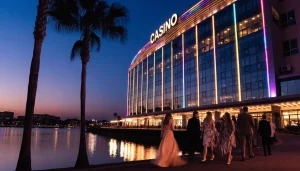 Perth Casino: Hotel Rooms, Deals and Visitor GuideCompare room deals by dates, room type, occupancy, inclusions and cancellation terms, with practical information on access, dining and facilities.
 Tasmania casino stays: rooms and venue detailsCompare direct hotel bookings, third-party listings and packages, and check room types, included services and cancellation conditions before choosing.
Searches for Melbourne casino hotel rooms and deals often combine two separate decisions: where to sleep and whether a particular casino is part of the plan. Keeping them separate prevents an assumed connection from entering the cost calculation. First establish the accommodation and its terms; then confirm any venue-related arrangements directly through the relevant official channel. A package should be valued only for benefits that are explicitly listed and available for the selected booking.
Opening hours are another separate matter. A room reservation does not establish when a casino is open, and a venue’s hours do not determine a hotel’s check-in or check-out conditions. Those details belong to their respective providers and should be checked for the intended date. Treating them as one combined offer can produce a gap between the itinerary and the booking terms.
The most defensible description is therefore narrow: a hotel can be called a casino hotel when the relationship is clearly stated by the property or operator; a hotel near a casino is a location-based choice; and a deal is meaningful only when its final price and conditions can be read. Without those distinctions, the wording sells association, not a confirmed accommodation benefit.
A poker room, a scheduled tournament and a casino’s general gaming floor are different things. A reference to poker at a Melbourne casino does not, by itself, establish that a dedicated room is operating, that cash games are available or that a tournament is being held. Those details need to be confirmed separately, rather than inferred from the word “poker” in a listing.
For a room to be useful information, its description should identify the facility and the kind of poker offered. A tournament notice should state its date, start time, entry conditions, registration process and relevant rules. Without those particulars, there is no sound basis for treating a room or event as available. A past event listing is not evidence of a current schedule, and a general venue description is not a substitute for tournament terms.
The same distinction applies to searches for poker tournaments in Melbourne. A tournament title alone does not explain who may enter, whether registration is open, what the structure is or what happens if a participant arrives after play begins. Those are material conditions, not minor detail. Until a current notice supplies them, entry cost, prize arrangements and timing should be treated as unknown rather than filled in from another venue’s format.
The phrase “casino rooms” can also refer to hotel accommodation, but that is a separate subject from a poker room. Here, the relevant question is whether a gaming facility for poker is described and whether its operating details are current. Accommodation information cannot establish anything about poker tables, tournament access or gaming rules.
A sports bar is likewise not evidence of a poker facility. It may be a separate venue service, and its presence or opening status cannot be inferred from a poker reference. Nor does a general claim that a casino is open establish that a particular poker room or tournament is running at that time. Venue-wide hours, gaming-floor access and event schedules are separate pieces of information.
This distinction matters because availability can change. A reliable current announcement needs to make clear whether the room or event is active on the relevant date, and whether the stated details apply to the specific session. Undated promotional copy, old event pages and third-party summaries may preserve information that no longer applies. If terms are absent, there is no basis for assuming that an event follows a familiar poker format or that a particular facility will be operating.
Poker involves financial risk, whether play takes place in a scheduled event or another setting. A budget set before a session should be treated as a firm spending boundary, not a target to exceed after losses. Increasing stakes to recover money already lost changes the amount at risk; it does not improve the calculation. Entry conditions and house rules should be understood before committing funds, and an unclear term should not be treated as a favourable one.
For a practical assessment, the minimum useful record is a current venue or event notice that identifies the poker offering and gives its applicable date and conditions. If that information cannot be established, the responsible conclusion is limited: the existence, schedule and terms of a Melbourne poker room or tournament remain unconfirmed. That says nothing about hotel rooms, and it does not turn a general casino listing into evidence of a poker event.
A page describing the best casino in Melbourne in 2026 can refer to a physical venue, but that does not make online casino games a lawful Australian service. The distinction is regulatory, not a matter of branding or where a website is hosted.
Under the Interactive Gambling Act 2001, operators must not provide real-money online casino games to people in Australia. That restriction covers pokies, blackjack, roulette, poker and other casino-style games. An Australian-run online casino cannot lawfully offer those games to people located in the country. A foreign licence does not give an operator permission to provide a service prohibited under Australian law. Lawful gambling services operating in Australia require the relevant Australian authorisation; an offshore licence is not a substitute.
The legal position for an individual player is different from the operator’s obligation. It is technically not illegal for an Australian player to use an offshore platform, but those platforms are not regulated under Australian law. That distinction is not a recommendation to open an account: Australian consumer protections and local oversight do not extend to an offshore operator. Disputes may have limited resolution options, and funds or winnings may be at risk if the operator fails.
Access is also affected by country-based restrictions. A site or software provider can use a player’s IP address to estimate location and block access from excluded countries. When a game is geo-blocked, it may not appear in the lobby from an Australian IP address. A loading failure can also reflect a location restriction rather than a device fault.
A VPN can make a connection appear to come from another country, but using one to access region-blocked pokies is against the site’s terms of service and may result in account suspension. It does not change the player’s physical location or remove the legal restrictions on an operator providing prohibited games in Australia. A workaround is not a licence.
Operators and software providers may apply different country restrictions, and availability can change. A title shown in an old review or discussed elsewhere is not evidence that it can currently be accessed from Australia. NetEnt, for example, blocked some of its games from Australian players in 2016; that historical action does not establish present availability across providers or platforms.
Questions about online bingo or casino games should therefore be separated from questions about a Melbourne venue’s dining or parking. Those are physical-location matters; they do not establish that an online casino service is available or lawful. Likewise, seeing a platform’s website does not establish that its games can be accessed from Australia. The relevant checks are the service offered, the player’s location and the operator’s legal authority—not the site’s name, appearance or offshore registration.
The practical boundary is clear: real-money online casino games cannot lawfully be supplied to people in Australia, even though individual use of offshore platforms is treated differently under the law. Offshore access remains outside Australian regulation, and a foreign licence does not supply the protections of a local authorisation.
“Near” is not a price category. It is a relationship between an accommodation address and a destination, and it becomes useful only when the route and the full cost are clear. A property marketed as accommodation near a Melbourne casino may still require a substantial walk, a vehicle or paid transport. The wording alone establishes neither distance nor convenience.
A useful comparison begins with the exact address of the intended destination and the accommodation property. From there, the relevant measure is the actual route: walking access, public transport or driving, with any transfers or access restrictions included. Straight-line distance can understate the time and cost involved. Until both addresses and a route are checked, “near the casino” is a label, not a travel estimate.
The same discipline applies to accommodation deals. A displayed nightly rate is not necessarily the amount payable for the stay. Dates, length of stay, room occupancy, taxes, service charges, cancellation terms and payment timing can change the final figure. A package should be compared on its total cost and inclusions, not on a headline discount whose reference price or conditions are unclear.
For a like-for-like calculation, the stay dates and room requirements need to be fixed first. Then compare the complete payable amount, the transport cost to the destination and the terms for changing or cancelling the booking. If a rate depends on advance payment or a non-refundable condition, that restriction has a monetary value: it transfers the risk of changed plans to the person booking. A cheaper rate is not automatically the lower-cost option if it removes flexibility that may be needed.
Parking belongs in the same travel calculation, but it should not be treated as a confirmed amenity or included benefit. A property’s parking arrangements, availability, charges and access conditions require separate checking. The same is true of parking near the destination: without a confirmed location and current terms, no dependable cost comparison can be made. Adding an assumed parking allowance would make the total look precise without making it reliable.
Accommodation searches can also mix distinct intentions. Some concern a hotel operated by a casino; others concern independent places to stay in the surrounding area. Those are different comparisons. An independent property’s proximity does not establish any connection with the casino, while a casino-related hotel search does not establish that a particular room or package is available for the dates required.
The phrase “Melbourne casino accommodation deals” therefore needs to resolve into concrete booking conditions before it can support a decision: where the property is, how the journey works, what the entire stay costs and what happens if plans change. Opening hours, gaming facilities and promotions are separate matters; none can be inferred from accommodation wording. Likewise, a casino’s location should be confirmed from a current venue source before travel is planned, rather than inferred from a hotel description.
A sound comparison is a final-amount exercise. The booking price, transport and parking costs, together with any restrictions that affect cancellation, should be visible before the choice is made. Where those items cannot be established, a claimed deal has no verified saving to calculate.
A contact number is useful only if it reaches the right department. General enquiries, event bookings, parking questions and lost-property matters may be handled separately, so a number copied from an old directory listing can produce the wrong answer even when it still connects. Before travelling or making a booking, confirm that the contact channel is published by the venue operator and that it relates to the specific service in question. No number or email should be treated as current merely because it appears in a third-party listing.
A venue map has the same practical limitation. It needs to identify entrances, internal routes and the destination being sought; a map that marks only the building is not enough to establish the easiest access point. If an event, bar or gaming area is the destination, its location should be checked against current venue information. Unlabelled map pins and copied diagrams are not reliable evidence of present-day access arrangements.
Parking requires separate confirmation. A search for a casino car park does not establish that parking is on site, available to the public, or suitable for a particular visit. Before relying on a parking listing, check whether it belongs to the venue or an independent operator, where its entrance is, and what conditions apply. Fees, capacity, access arrangements and any event-related restrictions should not be inferred from a map marker. Those details affect the final cost and arrival plan, so an unverified listing is not a usable comparison.
Bar listings also need to be distinguished from restaurant information. A bar’s existence, location, service style and current availability cannot be inferred from a venue’s general description. A listing may refer to a past operation, a temporary event space or a different business nearby. Current venue material should identify the bar and clarify any booking or entry conditions. Menus and food service belong to separate checks; the word “bar” alone establishes neither.
Concert information is especially time-sensitive. A past performance, archived event page or ticket listing does not confirm an upcoming programme. Before arranging transport or parking around a concert, confirm the event date, venue location, ticket status and any entry conditions through the event organiser or venue’s current channels. If the event is not listed there, a third-party calendar is not sufficient confirmation.
The same distinction applies to baccarat and craps. A general casino reference does not establish that either game is currently offered at a particular venue, where it is located, or what conditions apply. Such details require direct confirmation from the operator; they should not be filled in from an old map, an undated review or an assumption about what a casino normally provides.
For practical planning, the useful record is the operator’s current contact route, the relevant map or event listing, and confirmation of any parking or entry conditions that affect the visit. Without those details, a phone number, bar mention or map pin remains a lead to verify, not a confirmed service.
Breakfast, buffet service, resort facilities, rewards and employment are separate matters, even when they appear under one casino brand. A reference to a resort does not establish that breakfast is included, that a buffet operates, or that a particular meal is available to non-residents. The commercial terms depend on the specific offer: what is included, when it can be used, and whether the price covers food alone or forms part of a room package. Without those terms, “breakfast included” has no useful value for comparing costs.
Buffet descriptions need the same precision. The word can refer to a particular meal period or a limited promotion; it does not establish service times, menu, price or booking conditions. Those details can change, so a dated venue listing is more useful than a general description. A resort label is not a substitute for an itemised account of what is actually provided.
Rewards also require a distinction between a venue loyalty benefit and a gambling promotion. A membership or points scheme, if offered, would have its own eligibility, earning and redemption conditions. A bonus tied to gambling is different: its headline value does not show the amount that can be withdrawn or the conditions attached to it. Terms may impose substantial wagering, cap cash-outs or allow winnings to be voided if conditions are breached. The calculation is therefore the qualifying spend and permitted withdrawal, not the advertised bonus figure.
Wagering Requirements
Identify the Winnings
Determine the amount won from free spins, such as those reported by psu.com.
Apply the Multiplier
Calculate the required play based on the wagering condition, for example, 20 to 50 times the winnings.
Verify the Terms
Check the specific contribution rates for pokies and any applicable withdrawal caps before attempting a cash-out.
For a worked illustration, psu.com reports free-spin winnings subject to wagering requirements in a range from 20 to 50 times the winnings before withdrawal. That is a reported example, not a universal rule or evidence of a Melbourne venue offer. A separate specialist review describes a 30-times wagering condition on free-spin winnings. The difference is material: the exact promotion terms determine the required play, and a generic rewards label does not settle them.
Pokies may count in full towards wagering requirements, but the contribution rate alone does not make a promotion favourable. The base amount, eligible games, excluded play and any withdrawal cap also affect the result. A condition can be mathematically clear and still leave little practical value once all restrictions are applied. That is packaging, not a guaranteed return.
Employment is another independent category. A casino job listing should identify the role, location, employment basis, required qualifications and application process. A broad employer label does not establish that a vacancy is open, nor does it show pay, shifts or selection conditions. Those belong to the dated job advertisement and should not be inferred from older listings or general descriptions of casino work.
For breakfast, buffet dining, rewards or work, the useful comparison is the specific written offer or vacancy and its conditions. A venue name or resort description cannot substitute for those particulars; the final price, benefit or employment terms are what determine the decision.
Whether a Melbourne casino is open is a time-sensitive question, not a detail that can be answered reliably from an old listing or a general review. Operating hours, temporary closures and reopening arrangements can change, so a date-stamped notice from the venue is more useful than an undated summary. Without a current notice, a claim that the casino is open, closed or due to reopen would be speculation.
The same distinction applies to development. A reference to a project, refurbishment or proposed change does not establish that work has been completed or that services have resumed. Any account of casino development should identify what has actually happened and when, separating completed changes from plans and announcements. Otherwise, the word “reopening” can describe several different things: a return after a temporary closure, a staged restart, or a future proposal. Those are not interchangeable.
Entertainment and event listings need comparable care. A past concert, show or public event establishes only that it was scheduled at that time; it says nothing about the current calendar. A useful listing gives the event date and indicates whether it is confirmed, cancelled or rescheduled. If those details are absent, the listing may help explain a venue’s history but cannot support a plan to attend an upcoming event. No particular Melbourne casino entertainment programme or event schedule should be treated as confirmed without current venue information.
A review has a different shelf life from a fixed fact. Comments about atmosphere or facilities may describe one visit, while opening status and event availability can change. Reviews are therefore context, not a substitute for dated operational notices. A “Melbourne casino review” that does not state when its observations were made cannot settle whether a venue is open now or what is on its calendar.
Employment announcements also need dates and status. A vacancy notice can expire, and a general reference to casino employment does not establish that a role is currently available. Current recruitment information should be distinguished from older announcements or descriptions of the venue’s development.
Menu details sit apart from operating hours and event schedules: they concern dining and can change independently. A menu shown alongside an event notice should not be taken as confirmation that either remains current. The practical test for any of these details is straightforward: a specific date, a clear status, and an identifiable venue notice. Without those elements, the information is background rather than a reliable basis for deciding when to visit or what will be available.
A restaurant listing is useful only when it identifies a specific venue and gives details that can be checked. The name alone does not establish that a restaurant is inside a casino, currently operating, or serving the style of food suggested by a directory description. For Melbourne casino dining, those distinctions matter before menus or prices can be compared.
The first check is location. “At the casino” should mean the restaurant is within the venue, not simply somewhere nearby. A map pin, directory category or booking page may place a business in the surrounding precinct without establishing that it is part of the casino. A reliable listing should make the location clear and match the venue’s own published information.
The next check is whether the restaurant is open and taking bookings. Opening details can change, and an old listing may remain visible after a service has changed or closed. A current venue page should identify the restaurant and provide operating information; where that information is absent or inconsistent, the status should be treated as unresolved rather than assumed. A booking link is useful only if it leads to the named restaurant and offers dates that can actually be selected.
Menus need the same discipline. A general description such as “modern dining” does not show what is served, what a meal costs, or whether the menu shown is current. A menu should be attached to the correct venue and have enough detail to assess dishes and prices. If dietary requirements matter, the published menu or a direct response from the restaurant is the relevant evidence; a broad promotional description is not a substitute.
Price comparisons also depend on like-for-like terms. A listed dish price may not cover service charges, set-menu conditions or other requirements stated by the venue. Where those terms are not shown, a precise final bill cannot be calculated. That is a limitation of the information, not a reason to infer that the advertised figure is the complete cost.
Reviews can help identify recurring comments about service or food, but they are not a current menu or operating notice. Their dates and the restaurant they refer to should be checked. A review of a nearby business does not confirm the experience at a casino restaurant, and a high rating cannot verify a booking, price or current service.
The practical standard is straightforward: confirm the restaurant’s name, its exact location, current operating details, a current menu and any conditions attached to prices or bookings. If those pieces do not align across the venue’s own information and the listing being considered, the comparison is incomplete. No particular restaurant, menu or opening schedule can be treated as established without that confirmation.
A Melbourne casino address should be treated as a venue detail to confirm, not inferred from a map pin, an old directory entry or a third-party listing. Names and entrances can be represented differently across booking pages, transport listings and event material. Before arranging a visit, compare the address with the venue’s current official contact information and check that it refers to the intended entrance or building. A map result can establish where a pin has been placed; it does not, by itself, confirm that the location is the right point of entry.
The same distinction applies to a casino spa. A search result, image or package description may use “spa” loosely, or refer to a separate business nearby. That is not enough to establish an on-site day spa, its services or whether it is open to non-hotel guests. Confirmation needs to come from current venue information that identifies the facility and explains how access works. If those details are absent, the practical position is simply that the spa service has not been confirmed. No treatment menu, booking arrangement or facility should be assumed from the label alone.
Dress-code information requires similar care. Policies can differ between gaming areas, restaurants, bars and ticketed events, so a general statement about what is acceptable may not cover every part of a venue. A photograph of past guests is not a policy, and an old social post may no longer reflect current entry conditions. The useful detail is the rule published for the specific area and occasion, including any restrictions on footwear or clothing if stated. Where no current policy is available, it is more reliable to confirm directly before travelling than to treat customary casino attire as a formal rule.
These checks are separate from decisions about dining or accommodation. A hotel booking does not establish spa access, and a restaurant reservation does not confirm the dress requirements for another part of the venue. Each service has its own conditions.
For practical planning, the relevant record is concise: the confirmed street address and entrance, whether the spa is actually on site and accessible, and the dress policy for the intended area. A detail that cannot be matched to a current venue statement remains unconfirmed. That is not a minor distinction when the cost of relying on an incorrect address is a missed booking, or when entry depends on a policy that was never checked.
A food court and a pool are separate facility questions, even when both are associated with a casino visit. The first concerns whether there is a shared dining area with multiple food outlets; the second concerns whether swimming facilities are available on site and who can use them. Neither follows automatically from the presence of a casino or a hotel.
For a food court, useful details include its location within the complex, the range of outlets, service hours and whether the area is open to the public. A venue directory should distinguish a dedicated food-court space from individual dining businesses. That distinction matters when the requirement is a quick choice between several counters rather than a booked meal or a particular cuisine.
Pool access needs a different check. A pool may belong to a hotel or another part of a wider property, rather than being a general casino amenity. Access could depend on guest status, membership, operating hours or separate entry conditions. The facility’s location and access rules are more consequential than the word “pool” in a property description.
Current venue information is the appropriate basis for either decision. A listing should identify the exact facility and state whether it is open, who may enter and any applicable conditions. If those details are not clear, direct confirmation from the venue is preferable to relying on an old directory entry or a broad description of the complex. A nearby café or a pool at a separate hotel does not establish that the casino itself provides either facility.
The practical test is straightforward: confirm the amenity, its location and access terms before making plans around it. Food options and swimming facilities should be treated as independent features, not assumed components of a Melbourne casino visit.
Yes. The Interactive Gambling Act restricts operators based in Australia from offering online casino games such as pokies, blackjack and roulette to people in Australia. Offshore sites may still be accessible, but they are not regulated under Australian law and may block Australian players or games.
You must be 18 or older to play poker machines in NSW.
Australian-based operators cannot offer online casino games to people in Australia under the Interactive Gambling Act. It is technically not illegal for Australian players to use offshore sites, but those platforms are not regulated under Australian law; NSW poker-machine players must be at least 18, and mandatory pre-commitment systems require players to set a loss limit before playing.
Region blocking uses a player’s IP address to identify their location and restrict access to games or providers in certain countries. A blocked game may not appear in the lobby or may fail to load.
Check the game’s RTP, which estimates the share of wagers returned over a very large number of spins, and remember that each spin is independent. If you consider free spins or bonus offers, check their wagering requirements before playing.
Pokies can offer free spins and bonus rounds; some also have buy-bonus options that let players pay to enter a bonus round directly. Progressive jackpot games add a portion of each bet to a growing jackpot.