
Apple Pay’s everyday use in Australia does not confirm that an online casino offers it to Australian residents.
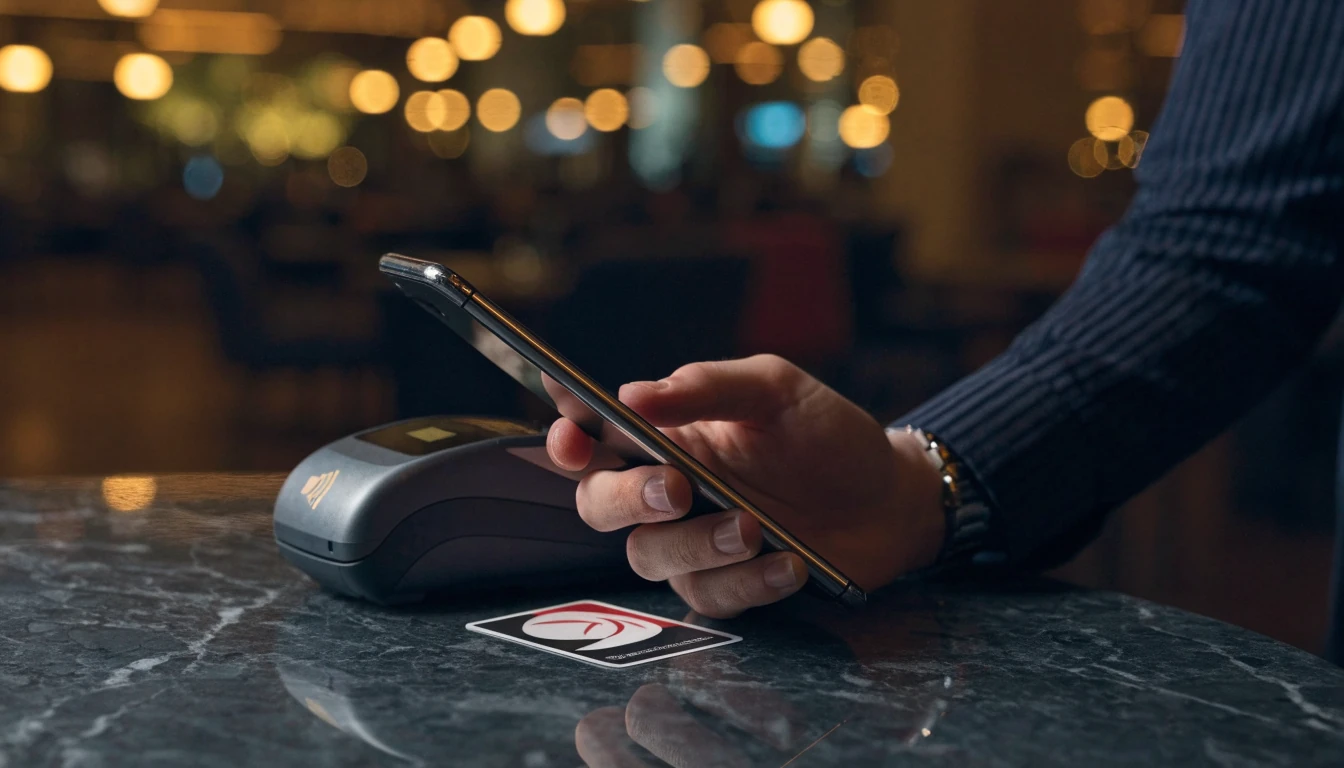
Contactless payments are part of ordinary life in Australia. Credit and debit cards can be tapped at almost every point of sale, and mobile wallets, including Apple Pay and Google Pay, are similarly familiar across the country. That makes Apple Pay an established way to pay in everyday settings. It does not, by itself, establish that an online service accepts it.
The distinction is between familiarity with a payment method and acceptance by a particular merchant or service. A phone may be used to pay at a shop, while a physical card or a bank-linked service such as PayPal is used elsewhere. Australian consumers are accustomed to moving between those options. The choice depends on what the individual transaction supports, not simply on which methods are common nationally.
This matters when an online search concerns Apple Pay at an Australian online casino. General knowledge that Apple Pay is widely accepted in Australia cannot confirm that a particular casino offers it, or that an online casino accepting Apple Pay is available to Australian residents. Retail payment coverage and online service terms are separate questions. Treating one as proof of the other turns a broad pattern into a specific claim it cannot support.
Apple Pay availability can depend on a casino’s current payment options, so check the cashier before registering or depositing. The details below provide a few verified points to help you assess each option; they do not confirm Apple Pay acceptance.
WinSpirit Casino
WinSpirit Casino lists a Curacao eGaming licence, OGL/2024/923/0383, issued through Antillephone N.V., and a minimum deposit of A$30. The supplied details do not confirm Apple Pay availability.
Neospin
Neospin lists a Curacao Gaming Control Board licence, OGL/2023/176/0095, under Hollycorn N.V. Apple Pay acceptance is not specified in the supplied details.
Golden Pokies
Golden Pokies is listed as holding a Curacao licence. No deposit or payment-method details are provided, so Apple Pay acceptance cannot be confirmed.
Uptown Pokies
Uptown Pokies is listed as operating since 2017 and holding a Curacao licence; its minimum deposit is A$20. The supplied details do not say whether Apple Pay is accepted.
Wild Tokyo
Wild Tokyo lists a Curacao licence and a minimum deposit of A$10. Its stated payout times are 30–60 minutes for crypto and 1–5 days for fiat; Apple Pay availability is not specified.
JustCasino
JustCasino lists a Curacao Gaming Control Board licence. The supplied details do not confirm Apple Pay acceptance or provide other operator-specific figures.
House of Pokies
House of Pokies lists an international iGaming licence, but the source does not name the jurisdiction. Its stated PayID payout time is 1–24 hours, with minimum deposits of A$30 generally and A$10 for PayID; Apple Pay is not specified.
Thor Casino
Thor Casino is listed as holding a Curacao licence through Antillephone N.V. (Versus Odds B.V.), with a minimum deposit of EUR 20. The supplied details do not confirm Apple Pay availability.
SpinsUp
SpinsUp lists a Curacao Gaming Control Board licence, OGL/2023/174/0082, under Dama N.V. No Apple Pay or deposit information is provided.
Rollero Casino
Rollero Casino lists a Curacao Gaming Control Board licence, OGL/2023/176/0095, under Hollycorn N.V. The supplied details do not confirm whether it accepts Apple Pay.
Apple Pay is a digital wallet, but its presence on a phone does not mean it can be used for every online transaction. Acceptance depends on the service and the payment arrangements it makes available. The same distinction applies to contactless cards: broad acceptance at physical terminals does not automatically carry over to online checkouts.
The comparison is straightforward. A person might tap a phone at a local retailer, use a card for another purchase and use a bank-linked service for a separate transaction. That flexibility shows that consumers are familiar with different payment types. It does not show that every merchant accepts each one, or that the terms are interchangeable.
Accordingly, references to Australian pokies and Apple Pay need careful interpretation. The words may describe an interest in paying through a familiar wallet, but they do not establish that any particular online gambling service supports the method. Nor does the phrase “Australian” establish where an operator is based, what rules apply to it, or whether the service may lawfully be offered to people in Australia.
The available Australian payment context supports a limited conclusion: contactless cards and mobile wallets are widely used, and consumers are comfortable switching between cards, wallets and services linked to banks. It supports no operator-level conclusion. Broad use in shops is not a substitute for terms published for a specific online service.
That boundary is important because payment language can sound more definitive than it is. A statement that Apple Pay is common in Australia describes consumer familiarity and acceptance across everyday payments. A statement that an Australian online casino accepts Apple Pay would be a specific claim about a service. The first does not verify the second.
The same applies to phrases such as “Apple Pay mobile casino” or “online casino with Apple Pay.” They combine a payment brand with a type of online service, but the combination itself is not evidence of support. A payment method may be common in the country while a particular online transaction does not offer it. Familiarity answers whether the method is recognisable; it does not answer whether a given service accepts it.
For payment analysis, there are two different questions: how familiar a method is in Australia, and whether a named service accepts it for a particular purpose. The first can be answered at a broad level. The second requires service-specific evidence and cannot be derived from general contactless payment habits.
This is also why a search for the best Australian online casino using Apple Pay cannot be settled by pointing to Apple Pay’s everyday popularity. A ranking or recommendation would require confirmed information about the relevant services, not an assumption based on how often people tap a phone elsewhere. Without that distinction, a general observation about Australian payments risks being mistaken for a claim about online casino access.
The accurate starting point is narrower: Australians commonly use contactless cards and mobile wallets, and they switch between payment types as needed. That context explains why Apple Pay may be familiar to consumers. It does not confirm acceptance by online casino services, and it should not be presented as doing so.
An Apple Pay deposit is a claim about a particular transaction: that a particular casino will accept a payment made through that wallet for a particular account. It is not established simply because Apple Pay is familiar as an everyday payment method, or because a device can use it elsewhere. A wallet’s general availability and a merchant’s decision to accept it are separate matters.
That distinction sets a clear limit on what can be stated about depositing. It would be misleading to present a sequence of steps—selecting Apple Pay, choosing a card, entering an amount and approving a prompt—as though it were a known procedure at a casino available to Australian residents. The sequence might sound plausible because it resembles other online payments. Plausibility is not confirmation.
The same limit applies to the amount entered. A figure such as a $10 deposit cannot be treated as a confirmed minimum or as an amount that an Apple Pay transaction will accept. A search phrase containing a dollar amount does not make that amount an operator’s payment condition. Without a stated, applicable term, the final value remains unknown; inserting a number would turn an assumption into apparent financial guidance.
Processing time is another separate question. A payment method’s presence in a cashier would not, by itself, establish when a deposit is credited or whether a payment is approved. No Apple Pay timing can be inferred from the fact that other wallet payments are common in Australia. Nor can the handling of a different card or bank-linked service be transferred to Apple Pay. Those are distinct payment arrangements, even when they appear on the same device.
Account checks introduce a further distinction. Online casinos commonly require customers to pass a Know Your Customer assessment before they can carry out financial transactions. KYC is an identity and account-verification condition; it is not evidence that Apple Pay is accepted. Completing an identity check does not determine which payment methods a cashier supports, and an Apple Pay option—if displayed—would not establish that the account has completed the required assessment.
The order and effect of those conditions should not be blurred. Payment acceptance concerns whether the operator processes a particular method. KYC concerns whether the customer’s identity and account information meet the operator’s verification requirements before financial activity. One condition cannot be used as proof of the other. A wallet logo, a general statement about mobile payments, or the ability to use Apple Pay with another merchant does not settle either question for a particular casino account.
Apple Pay Deposit
Selection
Select Apple Pay as the payment method in the casino cashier.
Card Choice
Choose the preferred card linked to the wallet.
Amount Entry
Enter the desired deposit amount.
Approval
Approve the transaction prompt to complete the deposit.
This also explains why a deposit amount cannot be calculated from the payment label alone. The amount submitted, whether the transaction is accepted, and whether funds are credited are different outcomes. Without confirmed terms for the operator and account in question, there is no basis for calculating a minimum, predicting an approval, or assigning a crediting time. A precise-looking figure would not make the result more certain.
The useful conclusion is narrow. “Apple Pay deposit” describes a proposed payment route, not a verified transaction or a guaranteed cashier option. KYC remains a separate prerequisite that online casinos commonly apply before financial transactions. Neither point supplies a confirmed amount, payment sequence or processing estimate for Apple Pay. Those details should not be treated as settled merely because Apple Pay is used widely in everyday commerce.
A label such as “Apple Pay accepted” is not enough to establish that an online service accepts Apple Pay from Australian users. It may describe a general payment capability, an option available in another country, or a feature that has changed since the claim was written. Without current, operator-specific confirmation, naming a casino as an Apple Pay option would turn an untested statement into a recommendation.
That distinction matters because mobile-wallet use in Australia is widespread: Apple Pay and Google Pay are accepted almost everywhere in everyday commerce. That does not show that either wallet is available in an online casino cashier. The payment method, the merchant’s payment arrangements and the customer’s location all affect what is actually available. A familiar logo is evidence of a brand, not evidence of a working payment route.
A useful claim identifies the operator and the relevant market, and makes clear what “accepts Apple Pay” means. It should refer specifically to payments available to Australian users, rather than to a platform’s general payment options or to availability in another jurisdiction. A page that mentions Apple Pay without specifying the market leaves a material gap.
The status of the claim also matters. An operator’s current payment information is more directly relevant than an old comparison page, but even a published payment list does not necessarily establish that the option will appear for every account. Payment availability can depend on account or transaction conditions. The claim should therefore be read as a statement about a stated offering, not as a guarantee that a particular cashier will display the method.
A further distinction is between a wallet being accepted somewhere in a service and Apple Pay being available as the payment method at the point of transaction. A page may use “Apple Pay casino” as shorthand while offering no clear description of where the wallet is supported. If the wording does not identify the transaction and market, it does not settle the practical question.
Terms such as “best” or “top” are rankings, not payment evidence. A list can repeat operator names and still fail to show whether Apple Pay is currently offered to Australian users. Ranking criteria may concern other features entirely, while a payment badge may be based on a general or outdated description. Neither presentation supplies the missing confirmation.
Comparisons should also distinguish an operator’s own statement from an independently checked claim. A third-party page can help locate information, but its wording alone cannot establish that the payment option remains available. Where the date, market or basis for the claim is unclear, the sensible classification is unconfirmed—not accepted.
The same standard applies to phrases describing an “instant” Apple Pay withdrawal. A payment label does not establish a payout route or timing. Those are separate claims and need separate, specific support. Calling a service an instant-withdrawal option without that support is a stronger assertion than the acceptance label itself.
A payment claim can be assessed by checking whether it answers three basic points: which operator it concerns, whether it applies to Australian users, and what transaction it covers. If any point is absent, the statement should not be treated as a confirmed match. If details conflict across pages, the conflict is a reason for caution rather than a basis for choosing the more attractive description.
This approach produces a shorter list, sometimes no confirmed names at all. That is a more accurate result than filling a ranking with operators whose Apple Pay status has not been established. The word “best” cannot repair a missing payment check; it only makes the unsupported claim sound more decisive.
A payout time attached to one payment method cannot be transferred to another by analogy. A specialist payment review gives an Amex casino withdrawal figure of up to five days to clear. That is a reported estimate for Amex, not a general casino payout standard and not an Apple Pay timetable.
The distinction matters because a withdrawal is a separate transaction from a deposit. A payment option displayed for adding funds does not, by itself, establish that the same option can receive a withdrawal. Nor does a reported clearing period for one card method establish how another wallet would be handled. The payment names may appear beside each other in a cashier, but they are not interchangeable terms.
“Instant” also needs careful interpretation. It may be used to describe a payment stage, while the full period before funds are available can involve other steps. A label that suggests speed is not a precise withdrawal commitment unless it states what event starts the clock and what event ends it. Without those definitions, “instant withdrawal” is a claim with no usable final amount of time attached to it.
For Apple Pay, no timing should be inferred from the Amex figure. The five-day estimate does not support a claim that an Apple Pay withdrawal is instant, faster, or slower. It says nothing about whether Apple Pay can be used to receive a payout at a particular casino. Treating it as an Apple Pay figure would turn a method-specific report into a broader promise.
This is especially relevant to searches for an instant Apple Pay withdrawal at an Australian casino. The wording combines a payment method, a payout outcome and a speed claim, but each part requires separate confirmation. An Apple Pay logo or a deposit option would not settle the withdrawal question; a general statement about fast payments would not settle the timing question. A reliable comparison requires a clearly stated withdrawal method and a defined measure of elapsed time.
The same care applies when a cashier uses words such as “processed” or “cleared.” Those terms can refer to different points in a transaction. A payment marked as processed may not necessarily mean that funds are already available to the recipient. Conversely, a stated clearing period should not be read as the time for every stage unless the terms define it that way. Precision matters more than the speed adjective.
The only quantified timing relevant to this comparison is the specialist review’s Amex estimate: up to five days for casino withdrawals to clear. Its scope remains narrow. It should not be quoted as an Apple Pay estimate, a general casino withdrawal deadline or a guarantee that every Amex payout will follow the same schedule. Actual payment terms are tied to the method and the operator’s stated conditions.
That leaves a straightforward accounting rule: keep the payment method, transaction direction and timing measure together. An Amex withdrawal estimate belongs to Amex withdrawals. It cannot be used to calculate an Apple Pay payout, and “instant” cannot fill that gap. A claim about Apple Pay withdrawal speed needs its own stated terms; borrowing another method’s number creates precision on paper, not evidence of when money will arrive.
The legal boundary applies to the service being offered, not to the payment method attached to it. Under the Interactive Gambling Act 2001, operators cannot provide real-money online casino games to people in Australia. The prohibition covers casino-style play offered to customers physically located in the country; whether a cashier displays Apple Pay does not alter that position.
The Act is directed at operators. It does not explicitly make a player’s use of an offshore casino a criminal offence. That distinction should not be read as approval, a guarantee of access, or a statement that an offshore operator is lawful. It describes who the prohibition addresses, not whether an offshore site is a sound place to deposit money.
Enforcement sits with the Australian Communications and Media Authority (ACMA), which administers the Act’s enforcement. The relevant legal question is therefore not whether a casino accepts Apple Pay, Apple Pay debit, or another payment route. Payment acceptance cannot establish that a service may lawfully be offered to people in Australia.
There is a separate consumer-protection issue. Australian consumer law does not protect players who use offshore casinos. If a dispute arises over an account, payment, or withdrawal, the protections available for a domestic consumer transaction cannot be assumed to apply. That exposure is distinct from the payment brand shown at checkout: a familiar wallet does not convert an offshore gambling service into a locally protected one.
This also limits what can be inferred from a claim that a casino site takes Apple Pay. Even if a payment option were displayed, that fact alone would say nothing about the operator’s legal position in Australia or the remedies available to a player. A payment logo is a payment detail, not evidence of local authorisation or consumer protection.
The same distinction matters when a site is described as an Australian casino. That label does not by itself establish that the operator is based in Australia, that Australian consumer law applies, or that the service is permitted under the Interactive Gambling Act. The legal status turns on the nature of the service and its provision to people in Australia, rather than on branding or the currency used in a cashier.
Accordingly, searches for casinos that accept Apple Pay in Australia cannot be answered as though payment compatibility settles the more important legal conditions. The law bars operators from offering online casino games to people in the country, while the player is not explicitly criminalised for using an offshore site. At the same time, Australian consumer law does not protect players using those offshore casinos. These are separate points, and neither can be replaced by a statement about a wallet’s availability.
A payment method and a casino game are separate parts of an online service. Apple Pay describes a way to pay; it does not, by itself, identify which games an operator makes available or establish that payment can be connected to a particular game. A label suggesting otherwise collapses two different questions into one.
That distinction matters because phrases such as “casino games with Apple Pay” can imply that payment compatibility is determined game by game. There is no basis for that inference. A game’s name, format or position in a catalogue cannot establish whether Apple Pay is accepted by the operator, and a payment logo cannot establish that the method applies to every part of a service. Those are separate conditions, not interchangeable descriptions.
The same applies to searches for mobile casino games that accept Apple Pay. “Mobile” describes how a service is accessed, while Apple Pay is a payment method. Combining the terms does not show that a particular game has its own Apple Pay function or that a payment can be made from within its interface. No game-specific compatibility claim follows from the terms alone.
In Australia, the legal boundary also remains separate from payment terminology. The Interactive Gambling Act 2001 prohibits operators from providing real-money online casino games to people physically located in Australia. A payment label does not alter that rule or make an otherwise prohibited service lawful.
Accordingly, game names and game categories cannot be used as evidence of Apple Pay availability. Nor does the phrase “Apple Pay casino payment” establish a connection between the wallet and a particular game. The relevant distinction is straightforward: payment acceptance concerns the operator’s payment arrangements; game availability concerns the content offered. Neither establishes the other.
Treating these as separate matters avoids an unsupported conclusion about compatibility. A game-specific claim would require evidence tied to that game and the payment arrangement in question. Without it, attaching Apple Pay to an individual game is more than a description—it asserts a technical and commercial condition that has not been established.
In Australia, contactless card payments and mobile wallets are part of ordinary retail payment activity. Apple Pay and Google Pay are accepted almost everywhere across the country, and consumers are accustomed to moving between cards, mobile wallets and services connected to bank accounts, including PayPal. That familiarity describes how people pay in everyday settings; it does not establish which payment methods an online gambling service accepts.
The distinction matters because the same wallet name can appear in very different payment environments. Acceptance at a shop or other local business is not evidence that a cashier on a gambling website offers Apple Pay. Nor does widespread use of mobile wallets show that an online service can process a particular wallet transaction for an Australian customer. Those are separate questions, and one cannot be answered by the general popularity of the technology.
“Australian casino” can also refer to an audience rather than an operator’s location. A service aimed at Australians is not necessarily Australian-operated, and its use of familiar payment language does not make it a local business or indicate that Australian consumer protections apply. A payment option, if shown, says something about the transaction route presented by that service; it does not establish the service’s national status.
For the same reason, a broad claim that a casino accepts Apple Pay in Australia needs to be tied to the specific operator and the relevant customer location. General statements about Australian payment habits cannot verify that claim. Everyday wallet acceptance is extensive, but it is not a substitute for operator-specific payment information.
The practical boundary is narrow: Australians are familiar with Apple Pay and readily switch among payment types, but that context alone cannot identify an Australian casino using Apple Pay. It cannot establish that any particular online cashier offers the wallet, either. Familiarity is evidence of consumer habit, not of online casino support or local protection.
A casino’s withdrawal rules are set at operator level, so terms for one payment method do not establish terms for another. A specialist review of Amex payments reports that individual casinos set their own deposit and withdrawal limits, which can differ between operators. That is a narrow point about Amex; it does not establish a general rule for Apple Pay.
For an Apple Pay withdrawal, the essential conditions would include whether the casino permits payouts to that wallet, any applicable minimum or maximum, and whether a separate payment route is required. Those details cannot be inferred from the fact that Apple Pay is familiar as a mobile payment method, or from an operator’s acceptance of it for deposits. Deposit acceptance and withdrawal eligibility are separate terms.
The phrase “online casino with withdrawal on Apple Pay” therefore describes a specific cashier condition, not a feature that follows automatically from an Apple Pay logo or deposit option. A cashier may present different methods for adding funds and receiving a payout. The distinction matters because a withdrawal limit only has practical meaning once the permitted payout route and its conditions are known.
The same caution applies to searches for Apple Pay withdrawals at pokies sites in Australia. A payment label alone does not establish that winnings can be returned through that method, or what limits would apply. No amount, fee, or withdrawal condition should be assumed from the payment method’s name.
Where a casino states that Apple Pay withdrawals are available, the relevant terms are the operator’s own current cashier and payment rules: the permitted payout method, any limits, and any conditions attached to using it. If those terms are not stated clearly, the withdrawal arrangement remains uncertain. An Amex limit, a card withdrawal rule, or a deposit option cannot fill that gap.
Payment compatibility is a cashier-level condition, not a feature of an individual game. A title’s appearance in a casino does not establish that Apple Pay can fund the account used to access it. Equally, a payment option shown by a casino would not, by itself, identify which games are available to an account.
That distinction matters when assessing claims about Apple Pay and pokies. The payment method concerns how money is transferred to or from an account; the game concerns how that account is used. Treating the two as a single compatibility claim skips the operator’s payment terms and can make a broad payment statement sound more specific than it is.
A list of Apple Pay casinos would not, on its own, verify compatibility with particular games. It would need to distinguish an operator’s current cashier options from game-specific conditions, rather than imply that one payment method is attached to every title.
For a payment comparison, the relevant evidence is the casino’s own current cashier information and terms for the account in question. Game descriptions and payment claims answer different questions. Combining them in one label may be convenient for marketing, but it does not provide a transaction condition.
The practical distinction is narrow: Apple Pay compatibility cannot be assigned to a particular game merely because the game and payment method are mentioned together. A claim about an individual title needs to be supported by a specific, current payment condition, not inferred from the casino’s general presentation.
Apple Pay acceptance and a casino promotion are separate matters. A payment method describes how a transaction may be made; it does not, by itself, establish eligibility for a bonus, a promotional amount or any withdrawal condition. The phrase “Apple Pay bonus” can sound like a single product, but it combines two terms that need separate confirmation.
A casino promotion, where one is offered, has its own conditions. Those conditions determine who qualifies and what restrictions apply. Payment acceptance alone cannot establish that an Apple Pay deposit counts toward an offer, or that using Apple Pay changes the offer’s terms. Nor does a bonus label establish the amount that could be retained after conditions are met. Without terms attached to a specific offer, those figures cannot be calculated.
The same distinction applies to deposits described as paying by Apple Pay: the payment choice is not evidence of a bonus entitlement. A promotional banner or general statement about a casino bonus should not be read as confirmation that every payment method qualifies. The relevant terms would need to identify the qualifying transaction and set out the conditions in force.
There is also a separate Australian legal issue. The Interactive Gambling Act 2001 prohibits operators from offering online casino games to people in Australia, and Australian consumer law does not protect players using offshore casinos. Promotional wording does not change either point, and a payment option does not supply that protection.
For a sound comparison, the payment method and any promotion must be assessed as distinct terms. Treating Apple Pay as a route to a bonus turns an assumption into a financial expectation; the transaction method alone cannot support that calculation.
Limits are set by each casino and can vary. Check the casino’s cashier or payment terms for its current Amex deposit and withdrawal limits.
Jackpot City Casino, Spin Palace, Ruby Fortune, Ignition Casino, Joe Fortune and PlayAmo are listed as accepting Amex deposits for Australian players.
Amex may block payments to a particular website, and Australian banks may also block gambling-related Amex transactions. Acceptance varies between casinos, so check the cashier’s listed payment methods.
Yes, some Australian online casinos accept Amex deposits, and those deposits are processed instantly. Not all casinos accept it, and withdrawals to Amex may not be available.
Amex deposits typically have no fee, but a casino may add a 1.5% surcharge, and Amex cards may incur a 3% currency conversion fee. Withdrawal fees may also apply.
Yes. Each casino sets its own Amex deposit and withdrawal limits, and they can vary; check the casino’s cashier or payment terms.