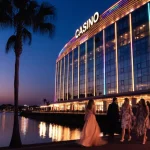
A guide to checking poker claims and finding reliable details on stays, facilities, dining and other Hobart casino searches.
A poker room, a scheduled tournament and poker machines are different offerings. A room for table poker may host cash games or organised competitions; poker machines are Electronic Gaming Machines (EGMs), played individually. Evidence about one does not establish that a venue offers the others.
That distinction matters when weighing claims about the city. Club Liverpool leads NSW clubs in the count of operational poker machines, but that is a comparison within NSW, not a guide to Tasmania. It says nothing about the availability of table poker, tournaments or EGMs in Hobart.
A tournament listing is useful only when it identifies the venue and gives terms that can be checked: the game format, entry conditions, registration arrangements and event timing. Without those details, a reference to a Hobart tournament does not establish that a game is running or that a particular poker room exists. A search for poker at a Hobart casino should therefore not be treated as evidence of a live event.
Choosing a casino for a visit to Hobart in 2026 calls for checking the details that matter to you, including licensing and payment terms. These brief verdicts highlight the specific information available for each listed operator.
WinSpirit Casino
WinSpirit Casino lists a Curaçao eGaming licence, issued by Antillephone N.V. Its minimum deposit is A$30.
Neospin
Neospin lists a Curaçao Gaming Control Board licence, held by Hollycorn N.V. The licence reference is OGL/2023/176/0095.
Golden Pokies
Golden Pokies is listed with a Curaçao licence. No further operator details are provided here.
Uptown Pokies
Uptown Pokies is listed as operating since 2017 and holds a Curaçao licence. Its minimum deposit is A$20.
Wild Tokyo
Wild Tokyo lists a Curaçao licence and a minimum deposit of A$10. Its stated payout times are 30–60 minutes for crypto and 1–5 days for fiat.
JustCasino
JustCasino lists a Curaçao Gaming Control Board licence. No further operator details are provided here.
House of Pokies
House of Pokies lists an international iGaming licence, though the issuing jurisdiction is not named in the source. PayID payouts are stated as taking 1–24 hours; the minimum deposit is A$30, or A$10 when using PayID.
Thor Casino
Thor Casino lists a Curaçao licence associated with Antillephone N.V. and Versus Odds B.V. Its minimum deposit is EUR 20.
SpinsUp
SpinsUp lists a Curaçao Gaming Control Board licence held by Dama N.V. The licence reference is OGL/2023/174/0082.
Rollero Casino
Rollero Casino lists a Curaçao Gaming Control Board licence held by Hollycorn N.V. The licence reference is OGL/2023/176/0095.
The same caution applies to descriptions of a “poker room”. The phrase may refer to a dedicated table-games area, a temporary event space or simply a general casino floor. Those are not interchangeable.
Poker machines raise a separate set of rules. In NSW, gambling on poker machines is restricted to people aged 18 or older. NSW also requires pre-commitment systems, through which a player sets a loss limit before playing. Those details describe the NSW framework; they should not be carried across state lines as evidence of Hobart venue procedures or Tasmanian requirements.
The term “poker” can blur distinctions that matter in practice. Table poker involves a game against other participants, while an EGM is a machine game. A tournament reference does not confirm access to poker machines, and a machine count does not establish that table poker is available. Club Liverpool’s standing among NSW clubs concerns operational machines alone.
Likewise, the NSW age rule and pre-commitment requirement relate to poker-machine gambling in that state. They are not evidence of a Hobart tournament’s entry rules. For any venue offering gambling, identification checks are a practical condition of access to restricted gambling areas and services; age eligibility should not be inferred from a tournament listing or a room description.
An “open now” label also needs careful interpretation. A venue’s general opening status would not by itself confirm that a poker room is operating, that a tournament is underway or that a seat is available. Poker events can have their own schedules and entry conditions, separate from the hours of other parts of a venue.
 Melbourne Casino Guide: What Visitors Can VerifySeparate hotel booking terms from casino services, and see which accommodation, dining, events and facility details still need direct confirmation.
 Adelaide Casino: Stays, Dining, Events and AccessLearn how Adelaide casino stays differ from hotel bookings, what package terms need to confirm, and how dining, events, parking and nearby…
Searches for casino rooms may also mean accommodation rather than a poker room. Those are separate questions: the word “room” alone does not confirm either a hotel stay or a poker area. The relevant distinction is the service being described, not the shared word.
For a decision involving poker, the useful evidence is venue-specific and current: an identified operator, a published game or event description, and terms that match the intended activity. NSW statistics can establish what is true of NSW clubs, including Club Liverpool’s machine count and that state’s pre-commitment rules. They cannot establish what is available in Hobart.
A stay described as accommodation near a Hobart casino depends on two details: a confirmed venue address and a property address. Without both, distance cannot be checked, and “nearby” is only a label. No specific lodging property, rate or accommodation deal can be confirmed here as connected to a Hobart casino. That leaves no reliable basis for recommending a hotel, guesthouse or other stay on the grounds of proximity.
The same limitation applies to searches for casino accommodation deals. A discount is useful only when its conditions and final price are clear. The headline rate may depend on dates, room type, length of stay or booking conditions. A comparison should therefore use the total payable amount and include any mandatory fees, rather than treating a promotional label as proof of value. Without confirmed offer terms, there is no sound way to calculate a saving.
Location matters to the calculation. A property’s address should be checked against the venue’s confirmed address, not against a broad city description or a map pin with an uncertain name. Distance on a map also does not establish travel time, transport availability or access after an event. Those details need current, property-specific confirmation before they can support a practical choice.
A useful comparison keeps accommodation costs separate from assumptions about casino access. A room booking does not establish entry privileges, gaming benefits, parking, or any promotional offer from a venue. Nor does a casino-related phrase in a property listing prove that the property is affiliated with a casino. Each claim requires its own terms and confirmation.
For a potential booking, the relevant arithmetic is straightforward: compare the full price for the same dates and occupancy, then account for cancellation conditions, payment timing and any included services that have a stated value. If those terms are absent or unclear, the apparent deal cannot be compared on equal terms. A low displayed price with restrictive conditions may not be the lower-cost option once the actual commitment is considered.
Proximity claims should be treated just as carefully. “Near” can mean different things depending on the route, transport mode and the traveller’s needs. A map distance alone does not confirm an accessible route or a convenient journey. A property’s own location information and current transport details are more useful than an unsupported claim of closeness.
 Perth Casino: Hotel Rooms, Deals and Visitor GuideCompare room deals by dates, room type, occupancy, inclusions and cancellation terms, with practical information on access, dining and facilities.
 Best Pokies in Perth: What Open-Now Listings MeanLearn what open-now labels and return figures can establish, how venue claims differ from machine availability, and what to consider with online…
The phrase “Hobart casino accommodation” can also blur two separate questions: whether a casino venue is established at a particular address, and whether lodging exists nearby. One does not prove the other. Until the venue location is confirmed, nearby-stay recommendations and distance-based comparisons remain unsubstantiated. That is a practical boundary, not a reason to infer a hotel or booking offer from the wording of a listing.
For now, the defensible approach is to treat any claimed Hobart casino deal as unconfirmed unless the venue, property, dates, total price and conditions can all be checked directly. No named nearby property or rate can be responsibly presented as a verified match. The difference between an advertised association and a confirmed stay is material: one is a claim; the other can be priced and assessed.
A casino hotel in Hobart would mean more than a hotel located near a gaming venue: the accommodation and casino would need to be part of the same property or clearly linked operation. That distinction matters when comparing room descriptions, booking conditions and access. A hotel name appearing beside casino-related wording does not, by itself, establish that guests can book rooms on site at a casino.
Room searches are best assessed from the property’s own listing. The useful details are the exact property name, room category, dates, total price, taxes and fees, cancellation conditions, and whether the booking covers accommodation only. These terms determine the cost of the stay; promotional labels such as “casino hotel” do not. A room rate without its dates and conditions is not a comparable price.
The same distinction applies to a casino hotel room search. A room may be marketed as part of a broader resort or entertainment property, but the description should make clear which facilities belong to the accommodation and which are separate. In particular, a booking should not be treated as including casino access, meals, shows or other services unless its terms explicitly say so. An attractive package headline is packaging; the included services and final amount are the deal.
For anyone comparing hotels in Hobart with a casino in mind, separate the lodging decision from the venue question. First identify the accommodation provider and confirm the reservation details. Then establish whether the casino is at that address, nearby, or merely mentioned in the listing. This prevents a location reference from being mistaken for an on-site facility. It also keeps room comparisons meaningful: a hotel room and a casino visit are separate products unless the booking terms join them.
Hours and entertainment schedules are separate from room availability. A hotel reservation does not establish that a casino is open during the stay, nor that a show is scheduled on those dates. Operating hours and event information can change, so any plan that depends on them needs confirmation for the relevant date from the venue or event organiser. A room confirmation is not a show ticket, and a show listing is not evidence of an available room.
The practical calculation is straightforward: compare the final accommodation price and its conditions, then assess any separate venue visit on its own terms. Check the property identity, the stay dates, the room type, what is included and the cancellation rules before treating a listing as a casino stay. If the listing does not clearly connect the room to a casino at the same property, it is safer to describe it simply as hotel accommodation rather than a casino hotel.
 Darwin Casino Development and Visitor InformationLearn how to distinguish completed work from proposals and reopening claims, alongside practical information about stays, dining, events and facilities.
 Sydney casino guide: stays, dining and gambling rulesLearn how to compare accommodation costs, distinguish casino-linked stays from nearby hotels, and check what is confirmed about dining, offers and gaming…
This approach avoids a common category error: proximity, branding and bundled language can appear together, but they do not mean the same thing. “Near a casino” describes location; “casino hotel” describes an accommodation-casino relationship. Only the property’s stated details and booking conditions can establish which applies. For Hobart, the term should therefore be read as a description to verify, not as proof of a particular room inventory, casino facility or package.
Parking, valet arrangements, bingo sessions and dining are separate venue services, each with its own operating conditions. A parking offer depends on where spaces are located, whether they are reserved for visitors and whether a fee applies. Valet parking is a distinct service, not a synonym for nearby parking. Bingo requires session details, while dining depends on the venues and hours actually operating. None of these labels alone establishes what a Hobart casino provides, so they should not be treated as confirmed features of a particular property.
The distinction matters when comparing costs. A free-parking claim has value only when its conditions are clear: the eligible visitor, the period covered and any validation requirement. A dining search similarly does not establish a restaurant’s menu, opening hours or booking terms. Without those particulars, a claimed saving or a planned meal has no dependable price attached. The calculation is simple: an unconfirmed service cannot be entered as a guaranteed part of a visit budget.
Online casino access is a different issue from local venue services. The Interactive Gambling Act makes it illegal for an Australian-run operator to provide real-money online casino games to people in Australia. The restriction covers casino-style games such as pokies, blackjack and roulette; it does not describe the facilities of a Hobart venue.
Offshore platforms occupy a different legal position. It is technically not illegal for Australian players to use them, but they are not regulated under Australian law. That distinction is not a local endorsement or a guarantee of access. Australian authorities actively block prohibited online casino services, and platforms may also restrict access by location. The practical and legal status of an offshore site should not be confused with the status of an Australian venue.
One visible consequence of location controls is that games subject to geo-blocking do not appear in the lobby when the service is accessed from an Australian IP address. A missing game is therefore not proof that the title has been removed everywhere or that a local casino offers it; the restriction may apply to a particular location. Access conditions can differ between operators and software providers, so a game catalogue seen elsewhere does not establish availability in Australia.
For a visit to Hobart, parking, bingo and dining should be assessed as local services with their own terms. Online casino access belongs to the separate question of Australian gambling law and geographic restrictions. Combining the two creates a misleading comparison: a venue’s amenities are not evidence that online casino games may lawfully be supplied to Australians, and an offshore game lobby does not confirm anything about on-site facilities.
 Best Casino in Brisbane: Hotels, Dining and DetailsSee what can and cannot be confirmed about Brisbane casino hotels, deals, dining, parking and facilities, and which booking details still need…
 Queensland Casino Hotels: Rooms, Deals and ChecksCompare Queensland casino hotel rates by dates and room type, then check package inclusions, cancellation terms, payment timing and extra property charges.
A Hobart casino contact number is useful only when it connects to the intended venue. Search listings, map pins and copied directory entries can refer to different businesses or become outdated. For a booking, accessibility request or other time-sensitive matter, the venue’s own current contact channel is the relevant reference; a number repeated across third-party pages is not confirmation by itself.
The same distinction applies to a map result. A pin labelled as a casino does not establish that it marks a gaming entrance, a public entrance or an operating venue. The name and location should match the venue’s own published information before being used to plan a visit. Car-park searches are a separate practical question: a nearby parking symbol on a map does not prove that parking is operated by, reserved for or connected to a casino.
A bar search also needs a venue-specific answer. The word “casino” in a business listing does not establish that the property has a bar, what it serves, its trading hours or whether entry is restricted. Those details can affect the cost and timing of an evening, so a broad directory description is not a substitute for current venue information. No particular Hobart casino bar or service should be inferred from the search wording alone.
Concert listings require the same care. An event page may identify a performer and date, but it does not establish that the event is at a casino unless the venue is named as the organiser or location. Nor does a venue name on an old listing prove that tickets remain available or that the event is still scheduled. The practical check is the event’s own current listing, with the location and ticket terms read together.
Baccarat and craps are table-game terms, not evidence that either game is offered at a Hobart venue. A reference to one of these games should be tied to a specific, current venue listing before being treated as a local facility. Online play is a different category: under the Interactive Gambling Act 2001, operators based in Australia cannot provide real-money online casino games, including blackjack and roulette, to people in Australia. That restriction concerns online casino services; it does not establish what a physical venue offers.
Sports betting has a different legal position and remains widely accessible in Australia. That does not make it interchangeable with online casino games: the product and the applicable rules differ. A listing for sports betting therefore cannot be used to infer that online blackjack, roulette, baccarat or craps is lawful through an Australian-run casino site.
For practical planning, contact details, venue location, entertainment listings and gaming availability each need their own confirmation. A single map result or general casino label cannot settle all four. The useful detail is the one attached to the specific venue or event, rather than the assumption carried by a search phrase.
A Hobart casino breakfast or buffet cannot be treated as an available service without a current venue listing that identifies the outlet, service hours and conditions. The same applies to claims that a casino operates as a resort. The word “resort” in a listing or search result does not, by itself, establish what facilities are on site or whether they are open to non-guests.
Breakfast and buffet information is particularly time-sensitive. A useful listing needs to say whether service is offered on the relevant day, whether it is a set menu or buffet, and whether booking or a separate charge applies. Without those details, there is no sound basis for comparing a casino breakfast with other local options. A buffet label alone also says nothing about its menu, availability or price.
The distinction matters for visitors planning a stay around a meal. A casino’s name in a search result does not establish that breakfast is served there, that a buffet is operating, or that dining access is included with any other service. Resort wording should be read just as narrowly: it is not proof of a particular package or facility.
A casino rewards program has value only through its actual terms. The label does not show how points are earned, what they can be exchanged for, whether they expire, or which services are excluded. Any claimed breakfast benefit would need to be stated in the program’s terms rather than inferred from the word “rewards.” Without a published offer and its conditions, a monetary value cannot be calculated.
A rewards program's value depends on its specific terms regarding how points are earned, their exchange value, expiration dates, and excluded services.
Employment searches require a different check. A current vacancy should identify the employer, position, location, duties and application process. A general reference to casino jobs in Hobart is not evidence that a role is open, and an old listing should not be treated as a live opportunity.
For a genuine vacancy, the useful comparison is between the duties and the written employment conditions: pay, hours, employment status, required experience and any stated training. Those are terms to assess in the listing or offer, not details that can be inferred from the word “casino.” The same applies to roles described as resort work; the label does not establish the employer or the work location.
Breakfast, buffet, resort, rewards and jobs are separate propositions, even when they appear together in a single listing. Each needs its own current terms. Until a venue or employer publishes those terms, neither a meal plan nor a job opportunity has a dependable value to compare.
A search for whether a Hobart casino is open needs a dated operational confirmation, not an old review, an event page or a reference to a proposed development. Those items answer different questions. A proposal describes an intention; an approval permits specified work; construction indicates progress; none of those stages alone establishes that a venue is receiving visitors.
The same distinction matters for reopening claims. A reopening date is useful only when it is tied to the venue and its operating status, rather than repeated from an earlier announcement. Changes to a project, a pause in work or a revised schedule can make older summaries misleading. A current statement from the relevant operator or public authority is stronger evidence than a copied listing, but its date and exact wording still matter.
Development reports should be read for what they actually establish: whether a project is proposed, approved, under construction or operating. A headline may compress those stages into “coming soon”; the underlying update may not. A development announcement also does not, by itself, confirm the facilities, gaming offer or opening arrangements that might eventually be available.
Event listings require similar care. A dated programme can support the claim that an event is scheduled, but not that it is recurring or that the venue is generally open. Check the organiser, location and event date together. A listing carried forward after its date has passed is not evidence of a current schedule. Nor does an entertainment notice confirm that every part of a venue is accessible during the event.
Reviews are backward-looking records. Their descriptions of atmosphere, service or facilities apply to the visit they describe, not automatically to present conditions. A review can help explain a past experience, but it cannot settle whether the venue is open now or whether a planned reopening occurred.
Menu references have the same limitation: a menu image or mention may be old and does not establish current service or opening hours. Keeping that separate from the question of operational status avoids treating a food detail as proof of a full venue opening.
For anyone assessing Hobart casino development or event information, the practical test is whether the claim identifies the stage, place and date clearly. If one of those elements is absent, the claim should not be treated as confirmation. A firm answer on opening or reopening depends on current, venue-specific confirmation; the wording of a search result alone cannot supply it.
A Hobart casino address should be treated as a venue detail, not inferred from a city name or a listing that merely uses “casino” in its description. Before arranging a visit, match the street address to the operator’s own current information and confirm that the listing refers to the intended venue. A map pin alone does not establish that a casino, bar or spa operates there.
Dress requirements are also venue-specific. Without a published policy for the particular property, neither formal attire nor casual entry can be assumed. Any stated rules may differ between gaming areas, bars and other facilities, so a general description of the venue is not a substitute for its entry conditions. The practical cost of getting this wrong is a wasted trip, not a useful style decision.
The same distinction applies to bars and games. A search result or directory label does not establish that a particular bar is open or that a particular game is available at a Hobart venue. Check the venue’s own current information for the facility and any access conditions before making plans. No bar list or games schedule should be treated as confirmed merely because it appears beside a casino-related listing.
Spa searches require even more care: a day spa, treatment rooms and a casino spa are separate offerings. The word “spa” in a property description does not establish which facilities are present, whether they accept day visitors, or whether appointments are available. Those details need confirmation from the operator before a visit is planned.
Career searches should likewise lead to an employer’s own vacancy information. A third-party listing may be old or may describe a different business at the same address; the job title alone does not establish the employer, location or current application status.
Online game access is a separate issue from games offered at a physical venue. Under the Interactive Gambling Act 2001, operators cannot provide real-money online casino games, including slots, poker, blackjack and roulette, to people in Australia. A web page offering those games should not be read as evidence of a local casino’s facilities or as a lawful Australian online casino service.
For visit planning, the decision sequence is straightforward: establish the venue and address, confirm the relevant facility and its entry rules, then check whether the information is current. Where those details cannot be matched to the operator, there is no sound basis for treating them as settled.
A restaurant described as being “at” a casino is not necessarily inside the gaming venue. It may be part of a wider complex, in a connected building or simply nearby. That distinction affects the practical decision: walking distance, entry arrangements, opening hours and whether a booking is made with the restaurant or another operator.
Restaurant Comparison
Verify Location
Check the restaurant's exact address and entrance to determine if it is inside, connected to, or simply near the casino.
Review Terms
Analyze the current menu, service hours, and booking conditions rather than relying on cached images.
Calculate Cost
Compare the final price including any minimum spends or cancellation fees to determine the actual cost of the meal.
For a Hobart casino restaurant, the useful details are concrete ones: the restaurant’s exact location, service hours, current menu, booking conditions and any access requirements. A listing that supplies only a venue name and broad cuisine description leaves the main costs unresolved. Menu prices, service periods and booking terms can change; older photographs and cached menus are poor evidence of what is available on the intended date.
“Near the casino” also needs a measurable meaning. A map pin can show a short straight-line distance while the actual route takes longer or uses a different entrance. Before treating a nearby restaurant as part of a casino visit, compare the walking route with the venue address and check whether the restaurant has its own entrance. This is especially relevant where a listing uses “casino” as a location label rather than identifying the restaurant’s operator.
A sensible comparison keeps the meal and the venue separate. Record the restaurant’s name, location, menu date, booking policy and any stated minimum spend or cancellation condition. If those terms are not shown, the total cost cannot be calculated reliably from a promotional image or a general description. “Special occasion” language is packaging; the menu and booking terms carry the financial detail.
Searches for a rooftop restaurant in Hobart raise a further distinction: a rooftop bar is not automatically a restaurant, and a bar listing does not establish food service. Check for a current food menu and meal-service hours rather than inferring dining from the view, photographs or venue category. The same applies to broad labels such as “dining” or “lounge”, which may describe a space without specifying a full restaurant service.
For restaurants in or near a casino, the sound basis for a recommendation is therefore not proximity alone. It is a current menu, a clear location and terms that show what the booking includes. Without those details, the meal’s price and practical arrangements remain unsettled, regardless of how confidently a listing presents the setting.
Food and pool facilities are separate questions when assessing a casino visit. A food court would mean a shared area with multiple food counters; it is not interchangeable with a restaurant, café or bar. The label alone also says nothing about the range of food, service hours, seating or whether an outlet is available to visitors who are not gambling.
For Hobart, no specific casino food court or pool can be identified from established venue details. A general reference to casino food in Hobart should therefore not be treated as confirmation that a particular outlet exists. Nor does a pool associated with a hotel or resort necessarily form part of casino access. The property, facility and entry conditions would need to match before either could be counted as an included amenity.
That distinction matters when comparing the practical cost of a visit. Food may be sold separately from admission or other services, while a pool may have its own access rules or be reserved for accommodation guests. Without confirmed terms, neither a meal nor pool use can be treated as included, complimentary or available to all visitors.
A reliable facility listing should identify the operating venue and explain what is open, who may use it, and any conditions attached to access. For food, the useful distinction is between a shared food area and individually operated dining outlets; for a pool, it is whether access belongs to the casino, a hotel, or another part of the property. Those are different facilities, even when they share an address.
Until a specific Hobart property and its current terms are established, the sound comparison is limited to confirmed features rather than assumed amenities. A food-court label does not establish a menu, and a pool reference does not establish visitor access.
It is a restriction that uses your IP address to identify your location and prevent access to certain games. Blocked games may not appear in the lobby or may fail to load.
Yes. The Interactive Gambling Act restricts Australian-based operators from offering online casino games such as pokies, blackjack and roulette to people in Australia. Offshore platforms are not regulated under Australian law, although it is technically not illegal for Australian players to use them.
Online pokies use a Random Number Generator, and each spin is independent of previous spins. RTP describes the theoretical share of wagers returned over a very large number of spins; it does not predict the outcome of an individual spin.
Offshore online casinos are not regulated under Australian law, though it is technically not illegal for Australian players to use them. In NSW, gambling on poker machines is restricted to people aged 18 or older, and players must set a loss limit through a pre-commitment system.